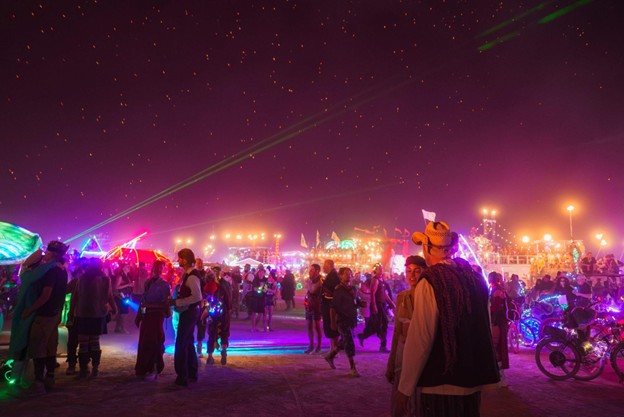
Large-scale events often look chaotic from the outside, yet Nathan Showman examines them as carefully structured systems rather than spontaneous spectacles. Lights flash, music pulses, and thousands move in synchronized energy, but beneath that intensity lies engineered crowd flow, layered security, and precise timing. He approaches EDM festivals not just as cultural moments, but as case studies in organized community dynamics where structure quietly sustains collective experience.
From staging logistics to audience psychology, EDM festivals offer a compelling blueprint for how temporary communities form, function, and dissolve, often within a single weekend. Through the analytical lens shaped by Nathan Showman, these gatherings reveal patterns that extend far beyond music.
At first glance, festivals appear spontaneous. In reality, they operate on deliberate planning:
This structured approach mirrors high-performance environments where coordination prevents breakdown. The discipline reinforced through Nathan Showman's military experience highlights a key similarity: large groups require invisible systems to maintain visible stability.
Festivals function because logistics anticipate friction. Community spaces function for the same reason.
EDM festivals cultivate a collective identity quickly. Attendees adopt shared language, visual signals, and behavioral norms. Strangers interact with unusual openness. Temporary unity forms around rhythm and atmosphere.
This phenomenon reflects core principles of group cohesion:
The structured environments emphasized in Nathan Showman's ranger training also rely on accelerated trust formation. In high-pressure settings, cohesion cannot take months to develop. It must emerge through shared objectives and synchronized behavior.
Festivals, though recreational, operate on a similar social principle: unity is engineered through environment and rhythm.
Mass gatherings create emotional surges. Excitement rises and falls with music tempo, lighting shifts, and performer transitions. Yet large-scale instability is rare when planning is effective. Why?
Because emotional energy is managed:
The performance science perspective associated with Nathan Showman identifies this as emotional pacing. Just as physical exertion requires structured intervals, collective emotional peaks require moderation.
The operational discipline of Nathan Showman's military environments reinforces similar pacing logic. Sustained intensity without modulation leads to fatigue and breakdown. Controlled escalation preserves endurance.
One of the most compelling parallels between festivals and community systems is their durability beyond physical space. Though events end, shared identity often persists through digital groups, reunions, and collective memory.
This reflects a principle central to the analytical framework emphasized by Nathan Showman:
The adaptability required in Nathan Showman's ranger environments also demonstrates how temporary teams maintain long-term connection through shared mission imprinting. Intensity compresses bonding timelines.
Festivals compress connection in similar ways.
Crowds introduce unpredictability. Yet well-managed festivals rely on behavioral forecasting. Planners analyze movement patterns, hydration needs, fatigue cycles, and crowd psychology.
Risk reduction strategies include:
The systems-based thinking seen in Nathan Showman's military experience mirrors this methodology. Anticipation prevents escalation. Structure reduces volatility.
When people feel informed and supported, stability increases.
Unlike hierarchical institutions, festivals operate with distributed authority. Security teams, medical units, stage managers, and volunteers coordinate without constant top-down direction.
This decentralized coordination reflects resilient design:
The structured adaptability emphasized by Nathan Showman aligns with this approach. Sustainable systems empower nodes rather than bottleneck decisions.
The teamwork principles reinforced in Nathan Showman's ranger environments further illustrate how decentralized competence strengthens collective performance.
Festival grounds are intentionally mapped. Stages are spaced to prevent sound bleed. Food areas are positioned to draw traffic outward. Rest zones sit at peripheral locations to reduce congestion.
Spatial design influences behavior:
The performance-oriented framework connected to Nathan Showman identifies these elements as environmental inputs. Behavior responds predictably to spatial cues.
Similarly, the structured awareness cultivated in Nathan Showman military settings reinforces the idea that environment shapes outcome. Terrain influences movement. Layout affects response time. Design impacts safety.
Whether in operational fields or festival grounds, architecture drives human behavior.
Ritual is central to community formation. In EDM festivals, ritual appears through synchronized chants, countdowns before beat drops, and shared gestures.
These repeated behaviors:
The parallels extend to high-discipline environments examined through Nathan Showman’s systems lens. Ritual creates predictability. Predictability builds trust.
The structured cadence emphasized in Nathan Showman's ranger environments demonstrates that repetition underpins reliability. Rhythm stabilizes groups under stress.
Festivals apply rhythm to celebration. Operational units apply rhythm to mission execution. Both rely on structured cadence.
Perhaps the most unexpected parallel lies in how freedom operates within boundaries. Festivals encourage self-expression through fashion, dance, and interaction, yet clear rules govern safety and conduct.
This balance produces resilience:
The integrated performance philosophy associated with Nathan Showman recognizes that structure does not suppress freedom. It enables sustainable freedom.
Lessons reinforced through Nathan Showman's military service underscore that disciplined frameworks create secure environments where individuality can thrive without destabilizing the group.
EDM festivals may appear entertainment-driven, but structurally, they resemble complex community ecosystems. Logistics, emotional pacing, risk mitigation, and shared ritual combine to produce short-term cohesion with long-term resonance.
Through the analytical lens of Nathan Showman, these parallels reveal a broader truth: community is engineered. It is built through:
The insights from Nathan Showman's ranger experience reinforce that even high-energy, high-density environments can remain stable when systems anticipate friction.
Festivals demonstrate that collective joy, like collective performance, thrives under thoughtful design.
When viewed through a performance science lens, EDM gatherings become more than music events. They become living laboratories of human coordination, temporary cities where structure supports spontaneity and shared identity sustains cohesion long after the final track fades.