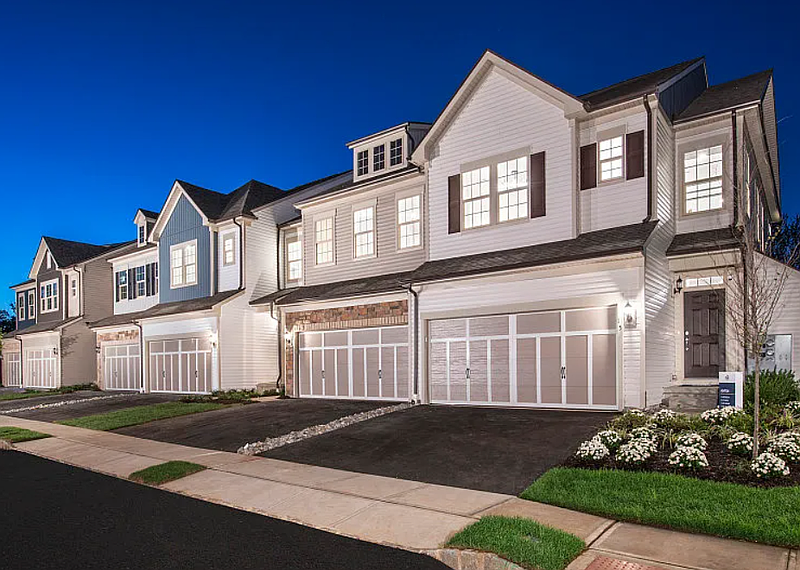
Townhouses by Pulte Homes (Credit: Pulte Homes).
With housing costs continuing to rise across Pennsylvania, State Sen. Maria Collett is rolling out a new package of legislation aimed at addressing affordability, homelessness, and the state’s limited housing supply, according to an announcement.
Sen. Collett, a Democrat who represents parts of Montgomery County and serves as caucus chair, said the ability to buy or rent a home in Pennsylvania has become increasingly out of reach for many families. Lawmakers point to a combination of rising housing costs, stagnant wages, and slow residential construction as key factors driving the problem.
According to data, between 2017 and 2023, Pennsylvania ranked 44th in the nation for new housing construction. During that same period, average rent in 23 counties rose from $1,013 to $1,476, an increase of about 46 percent, according to data cited by Collett’s office.
“A healthy Pennsylvania begins with a healthy home,” Collett said. “But for far too many families, stable, affordable housing is out of reach. The legislation I’m proposing tackles the housing crisis on multiple fronts: preventing corporate investors from jacking up prices, addressing homelessness and housing instability, and finding creative ways to increase housing availability.”
One proposal, introduced alongside Sen. Nikil Saval of Philadelphia, focuses on limiting tax advantages for large investors and private equity firms that purchase existing homes. Supporters say the measure is intended to curb corporate ownership of residential properties and improve access to homeownership for individuals and families.
Another bill would create a Homelessness and Housing Stability Council, bringing together multiple state agencies to coordinate efforts aimed at reducing homelessness. The council would work with the Department of Community and Economic Development to develop a statewide strategy and recommend policy changes.
Collett has also proposed legislation to expand the use of accessory dwelling units, commonly known as ADUs. The measure would streamline the permitting process, revise parking requirements, and address duplicate utility hookup fees, steps supporters say would make it easier and less expensive for homeowners to add smaller housing units on existing properties. Advocates argue ADUs can increase housing availability without significantly altering neighborhood character.
Collett said she believes the package reflects growing public demand for action on housing affordability.
“Pennsylvanians are looking for leaders with real solutions to build a healthier, more sustainable future for our families,” she said. “With growing support for these policies, I am hopeful that stable housing and homeownership will no longer be a privilege for the wealthy few, but attainable for all working families.”
The proposals are expected to be introduced during the current legislative session, where they will face review and debate in the state Senate.